

there is no script
on my thirtieth advent birthday

I’ve always hated the phrase, “you can’t teach an old dog new tricks,” because, first of all, I dislike dogs, and second of all, it’s stupid and decidedly untrue. My favorite stories are of older people going on adventures, or starting up entirely new careers in their sixties or seventies, or moving away or trying something new and transforming their life (see: A Man Called Otto, Thelma, Britt-Marie Was Here, Julie and Julia).
But as I approach the ripe old age of thirty and cross the threshold into a new decade—the one promised to be the best—I feel somewhat hopeless. Stuck in my ways. Desperately routinal but not in the routine I want.
I know, I know. Thirty is in no way an “old dog.” But as the age has crept closer, I’ve been asking myself the question: what makes a good life? or, if we’re being transparent, what makes a life not a waste?
My biggest fear, outside of being attacked in the darkness, is wasting time, wasting my life. Ironically, this fear can be crippling. So afraid I am of spending time with something that might end up being a waste that I do not do anything at all. Or, I do the safe version, the sideways version, of the thing I wish I was brave enough to do.
Even now, I’m tempted to berate myself: scream that it is too late, that I’ve ruined my life with all this waiting-for-the-right-time with my work, my art, my life. It’s been a slow year for visible “results.” I decided to start auditioning for plays again, and I’ve done the least amount of work I’ve done in years. My acceptance rate with writing has dropped significantly, and seemingly no one wants my manuscript.
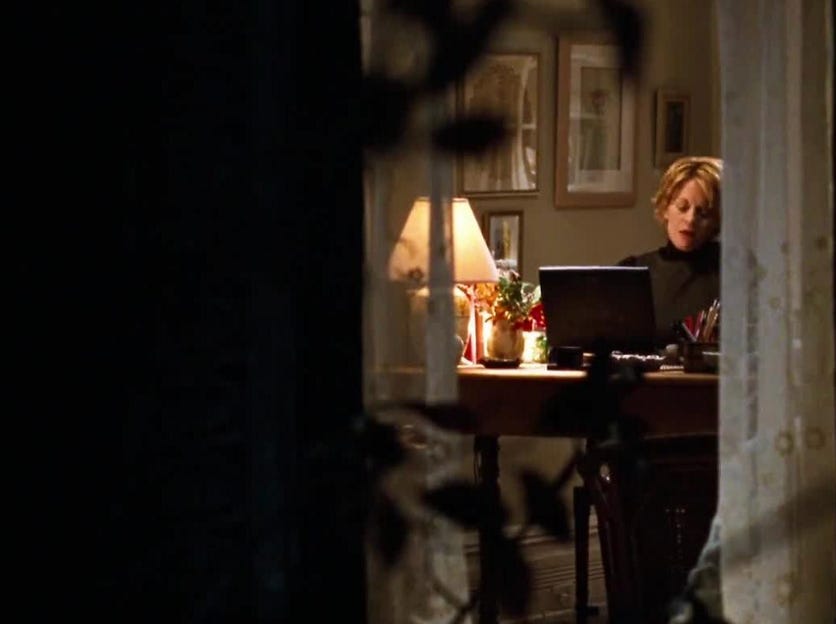
As the year comes to a close, I find myself wondering what Meg Ryan writes to her pen-pal-secret-boyfriend Tom Hanks in my favorite movie:
“Sometimes I wonder about my life. I lead a small life – well, valuable, but small – and sometimes I wonder, do I do it because I like it, or because I haven’t been brave? So much of what I see reminds me of something I read in a book, when shouldn’t it be the other way around? I don’t really want an answer. I just want to send this cosmic question out into the void. So goodnight, dear void.”
At 30, I’m wondering: what makes a life worthwhile? My life, too, is small—well, valuable, but small—and sometimes I wonder, is there a right way to make a life? And, am I doing it wrong? What happens when you go off script and you can’t find your way back on?
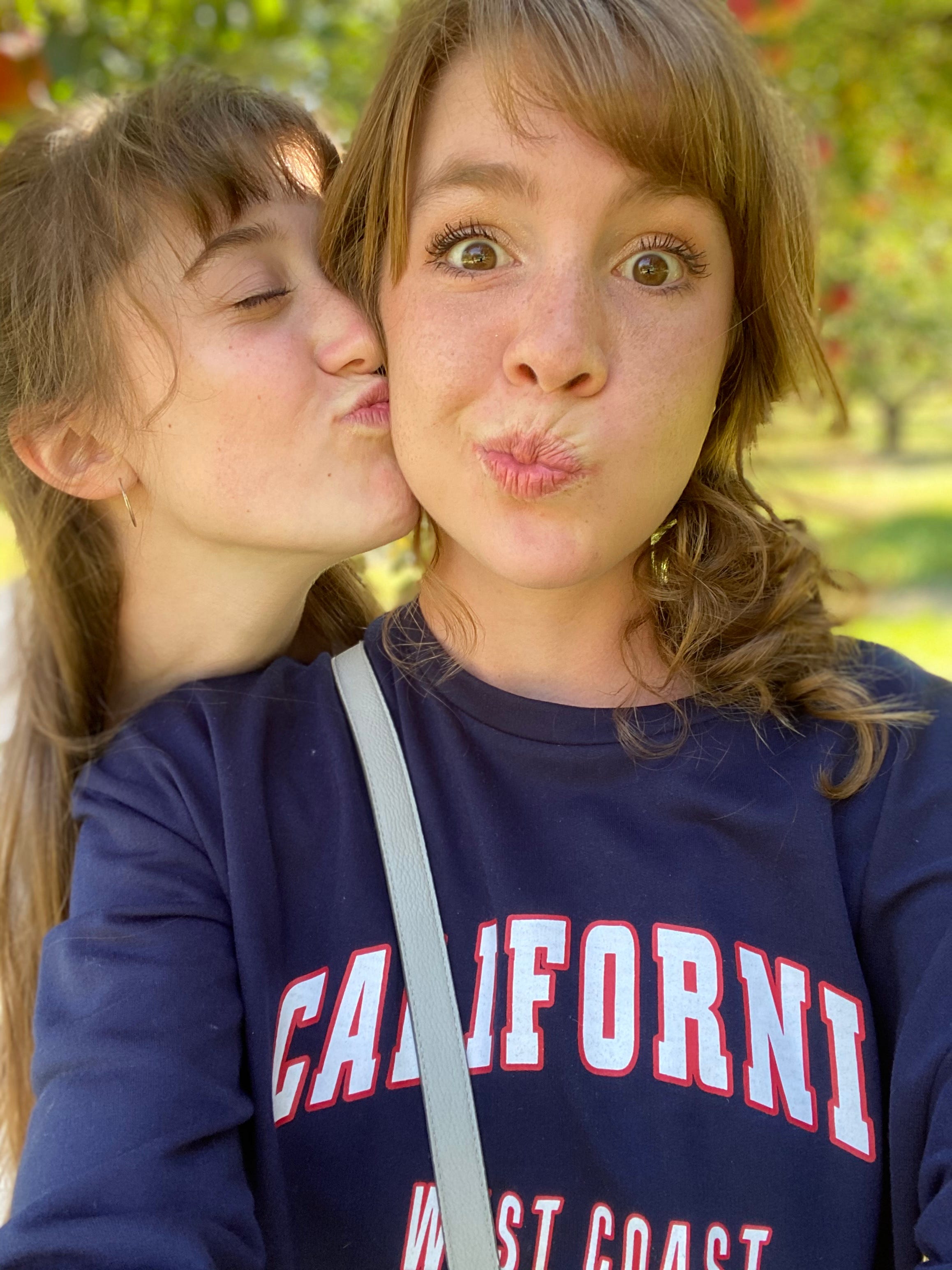
My best friend Jill and I have been talking about this idea lately. Especially growing up as a girl in Western evangelicalism, not to mention just a person in the world, you’re handed a detailed script for your life at a very young age. A perfect order in which your life is supposed to unfold for maximum happiness and holiness, complete with unspoken but clear cues as to your blocking.
(Before I continue, I want to say that I still am a Christian and I love God and the Bible. I think the Bible is there to help us know the heart and promises of God-With-Us, to hear the good news that we are loved and wanted beyond measure and invited into the work of God’s kingdom in the world, and that from this place of being loved we can obey and respond to God’s commands and calls on our lives, as listed in the Bible and what we hear from God for us. More on this later.)
That being said, this script handed to you by the Culture is loud and must be heard, no matter how hard you try to tune it out. It is as follows:
Go to college, find Godly spouse, date for 1-2 years, get married, establish career or start business, be married for approximately 5 years to enjoy each other before you have babies, start a Roth IRA and several savings accounts, travel the world before you have kids who will slow you down or you get too old to feel comfortable sleeping in a hostel, go on a mission trip, buy a house, start having babies around age 26 or 27, have perhaps a second baby around 29 or 30, and then maybe one more in your early thirties, get dog, go to church, plant garden, do little house projects, post about it, raise babies to be perfect adults, retire, take care of perfect grand babies, change the world (but quietly and not if it makes anyone uncomfortable). Oh yeah, and make sure you’re doing everything God tells you to do (as long as it fits within this pattern, because this is the right pattern), because if you’re doing what God tells you to do, this is what your life will look like, anyway! The (American) dream.
At the start of my third decade, I have only done like three and a half things on this list. I fell off the script after item one, and after that the order has gotten scrambled, and I’m too late on 90% of this timeline. Not to mention that the script makes no room at all for grief (which is a much larger part of life than what you’re told. False advertising!) When you actually talk to people, I think you’ll find out that this is true for many. At least, it’s true for Jill and me and Casey and a good chunk of my closest circle.
This birthday/advent, I’m pondering if this script actually more damaging than we think it is. Does it actually hold us back from that to which God is drawing us, from a life that is truly life, rather than serve as a guide? Whether we’re aware of this or not, how much do we ingest the narrative and allow it to stop us from listening to the true Guide, to make us afraid, or to become stuck because all of a sudden, we’re script-less in an entirely different play?
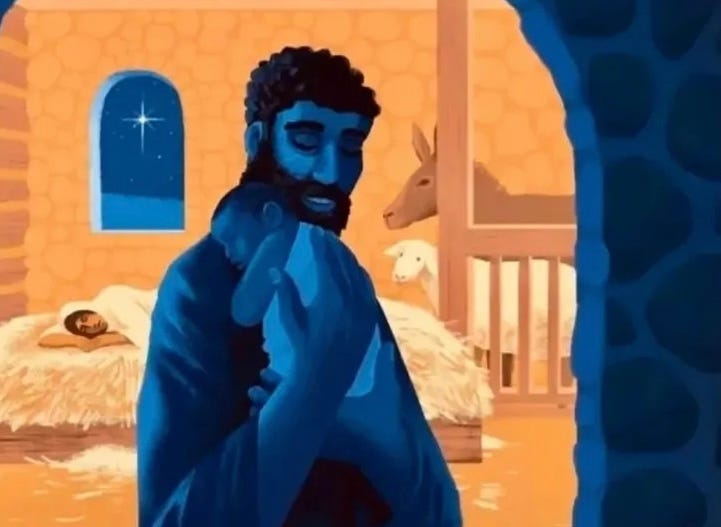
There’s no season I’d rather turn thirty in then advent. I love getting to have a birthday during a time of waiting and reflection, as I’m extra introspective around my birthday anyway. I love the advent story, I love the quiet, mystical, Holy-Spirit-overshadowing, I love all the things it says about God—about how he values small beginnings, about how personal he is, about how he came to us in a woman’s body, about how he wanted to become near to us, to know us, to become a human to know what being human felt like, in order to understand us and redeem us. About how he turns our lives around to create space for something new to grow.
Isn’t it odd that in the Church, we are so insistent on normative life patterns, when the God of the Bible is constantly rewriting people’s narratives, none of which looked “typical” for the culture at the time? Abraham and Sarah, Moses, Joseph, Ruth, Esther, Gideon, Amos, Hosea… just to name a few.
In the advent story, look what God gives to or asks of the key players:
to Zechariah and Elizabeth, a couple who could never conceive—God gives a baby in their old age (and not just any baby, but a boy who turns out to be the man prophesied to prepare the world for Jesus)
to Mary, a young girl on the margins of the Roman occupation—God asks her to receive the Holy Spirit into her body, carry and birth Jesus, and become Jesus’ mother, a new calling for the rest of her life, and “a sword that will pierce her soul, also”
to Joseph, a by-the-book, kind, upstanding Jewish man who had done all the right things—God asks him to believe Mary at a time when women were not believed about much, to set down his tidy life plan and open himself up not only to ridicule and shame for being with a woman whose son was not his, but also to follow God into a messy, scary, wild, stunning life
to the Shepherds, an overlooked group of night-shift wanderers without permanent housing—God chooses to tell them the good news first of all, asks them to use their voices to tell the most important story that they are not only included in, but central to
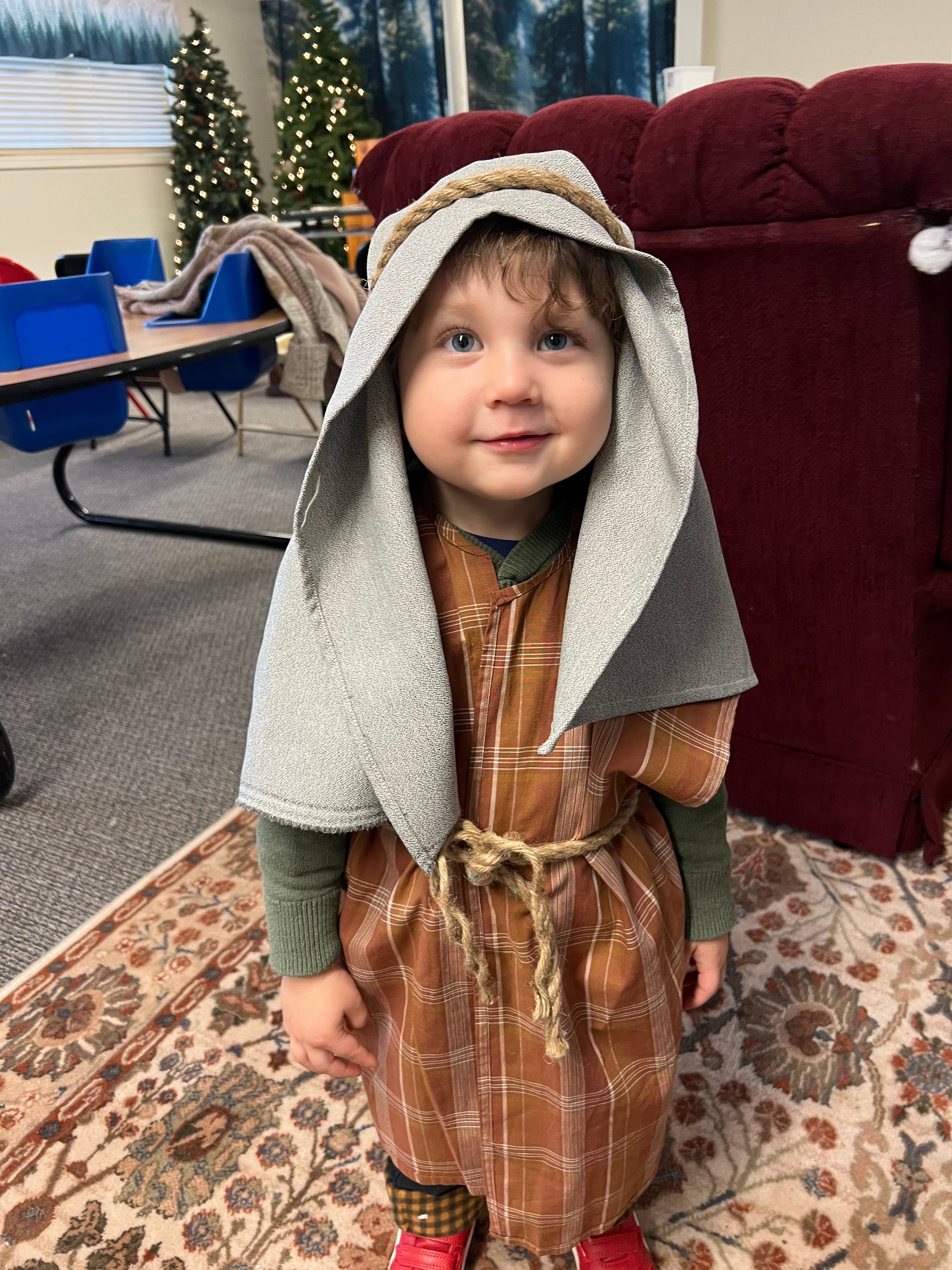
Friends, God is always clearing out the old way, shaking up the old, tidy routine to stir up something beautiful and new and redemptive, and we can meditate on that this advent, more than ever. In life with God, in life as a human, there is not just one script. You never know when that script you have in your hand will fail you (and it will fail you, sooner or later). But when it does, we have a God whose business is tossing it and inviting you to follow him instead. A God who, as Rilke says, takes your hand and walks with us silently out of the night, to the limits of your longing, to the country they call life.
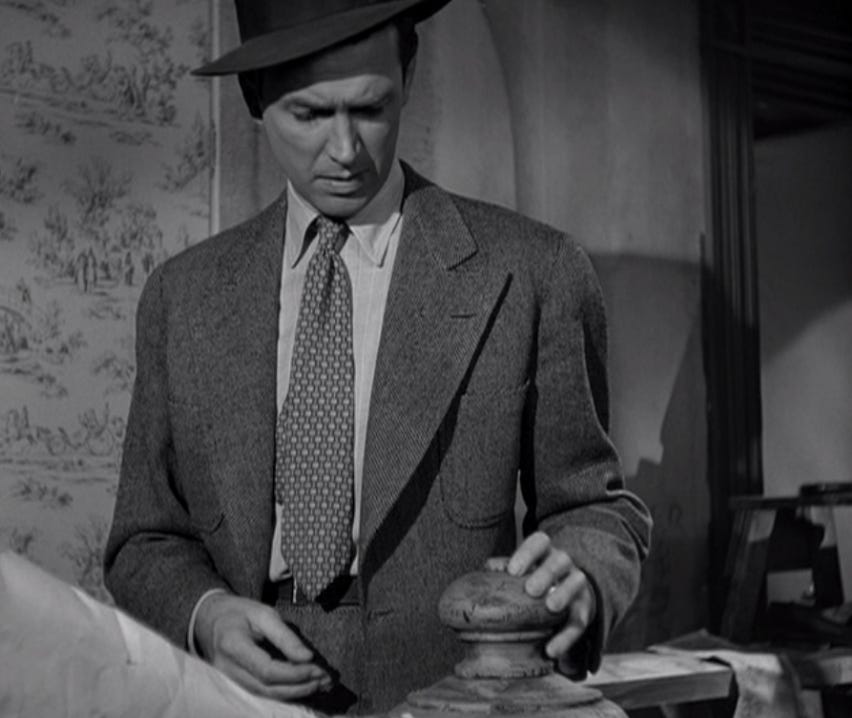
In the iconic Christmas film It’s a Wonderful Life, a story about George Bailey, a man who has big dreams and realizes none of them, only to discover that (spoiler) his life was truly wonderful because he spent it serving other people instead of himself. And this is true—he saved Bedford Falls from becoming Pottersville, and we all hope that Mr. Potter was brought to devastating justice. But what always kills me about that movie is that George’s dreams really do sound amazing. He was going to go abroad on a cattle boat and see the world and work and learn and study and have adventures. His life in Bedford Falls was a series of one bummer after another, and not only did he have to work with Uncle Billy, he spent his days taking the fall for people who didn’t deserve it. His was a wonderful life, yes, but also a life laced with grief and heavy disappointments and a feeling of being trapped in a small life.
I guess what I’m saying is that it’s possible to be disappointed when your life doesn’t look like the script you had in your hand, and also to love the small, brave life you have in front of you—the one you’re called to, which can be the most beautiful one, if you choose to say yes to it. Both things can be true at once.
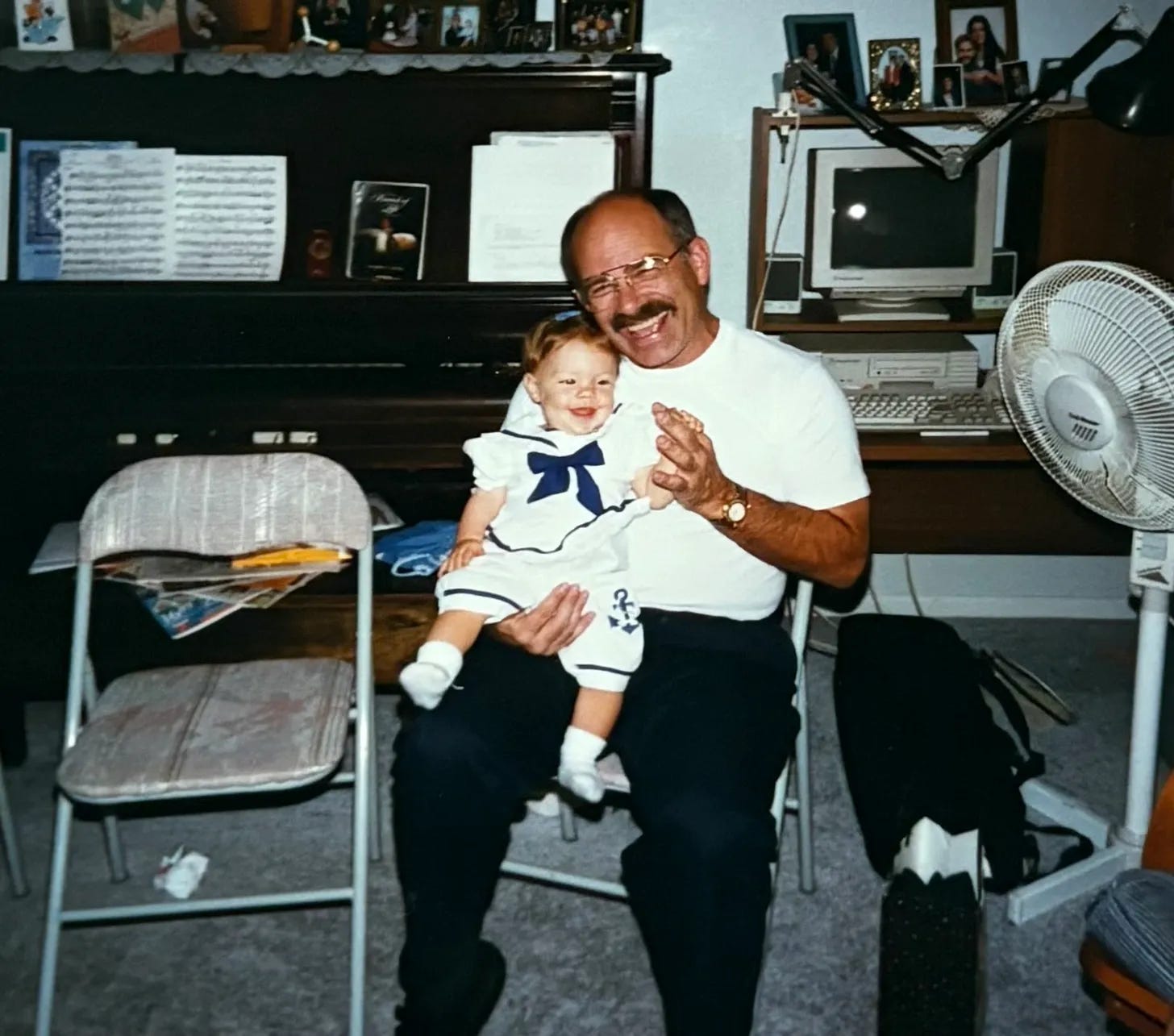
My grandpa passed away this last March, and we’re approaching our first Christmas without him. I wrote about his legacy here—he was a truly exceptional person, whose life was, like George’s, small and meaningful. As I learned more about him in his life and in his death, I know his life didn’t turn out the way he expected. There were hundreds of detours, big gaps of potential regrets all throughout it, threatening to cast grey skies all over his life. From my mom’s childhood into my own adulthood, his life rarely looked the way he’d expected it to, and yet, his life was truly vibrant. Joyful. Content. Magic.
Just a few months before he passed away, he stood up at our Thanksgiving table and read from Matthew 6, where Jesus has just finished talking to a huge crowd about how God’s promised to take care of them, to take care of every worry and anxiety, because if he takes care of the birds and flowers so well, how much more will God care for us? Jesus ends by saying, “but seek first God’s kingdom and his righteousness, and all these things will be given to you as well.”
“This has gotten me through my life, these last 70 years,” Grandpa said, his voice choked with tears.
I know that was true. It was evident that every time his script changed and fell apart and got all waterlogged in the rain, Grandpa kept seeking the kingdom of God, the beauty and justice of God all around him. He could improvise, could care for people and come alongside them in wildly sacrificial ways and not worry, because he knew that he was taken care of, and he intimately knew the voice that was telling him just that. He discovered, like George did, that true life comes from giving it away.
As Timothy puts it in 1 Timothy 6:
“Tell those rich in this world’s wealth to quit being so full of themselves and so obsessed with money, which is here today and gone tomorrow. Tell them to go after God, who piles on all the riches we could ever manage—to do good, to be rich in helping others, to be extravagantly generous. If they do that, they’ll build a treasury that will last, gaining life that is truly life.” (MSG)


During advents and celebrations of birthdays that feel disproportionately significant, I am reminding myself that advent (and entering my thirties) is a season of setting down scripts, of laying aside life plans to make room for the life God is unfolding in front of me. This is good news, for those of us who spent years clutching a script that failed us desperately, that has instead morphed into a sticky, heavy, impossible burden. Those of us wishing for something green and fresh to grow in our hearts.
The same God that spoke to Mary and to Joseph is speaking to us today, to me and maybe to you, too, gently prying our fingers off a life plan that could’ve been but isn’t, tilling the soil and making room for a new thing to sprout in its place. Something ultimately more beautiful, even if it feels difficult in the moment. That more and good things will come in their own time.
The good news of advent is that God is with us—God has interrupted our tidy, rigid lives by moving in next door. So no matter the call, no matter the life, we don’t need to be afraid. We can look around us with hope, because God is in the business of removing burdens and giving us life instead, even if the interruption hurts a bit. God is near in the death of our old lives, and God is near when new life follows, as it surely will. It can’t help itself.
In my thirtieth year and this advent season, I’m praying for hope and surprises in unexpected places. For you, too. For a life that is truly life.
xoxo, Alyssa
P.S. Need a last minute Christmas gift for a loved one? Check out this Poetry Reed Diffuser, complete with a Christmas poem on the package by yours truly. :)

This one’s got me in the feels ♥️
Wow. That was amazing❤️❤️❤️❤️