

what's the point?!?
on making art in a world gone mad

an introduction
To begin, I want to say that I did not want to write this. I did not want to write at all and have not wanted to write for months. I told my counselor this in our session yesterday morning, and he said “why don’t you write about that? I bet a lot of people could relate,” and I wanted to say “you’re not a writer, you don’t know anything about writing, why am I even talking to you about this, just be quiet Brian,” but as usual it was actually pretty good advice. So instead I said, “I guess.”
Then I got home from work and told my boyfriend what Brian had said, and he said the exact same thing. How annoying! Because of course I knew they were right.
Listen. I had every intention of being stubborn and NOT writing. But their words nagged at me, and against my will no less, I started having ideas flit through my brain. And then I saw a friend’s play last night, which always gets me thinking and feeling creative, and I came straight home and started this essay. So much for being obstinate.


WHENEVER I FEEL RESISTANCE from my writing desk, those pesky lies physically pushing me away from typing substack into the search bar, I try to imagine writers of old, or just in the not-so-distant past, writers like Louisa May Alcott (in the form of Jo March) or Dodie Smith or Mary Oliver or Anne Lamott, their notebooks in hand, furiously writing in the dawn light by the window, or hunched over a stolid candle-lit desk as they write perfect lines and weave perfect stories and deliver perfect poems, not too many words, not too much of any one thing, just right, Goldilocks women. Perhaps a cup of tea, perhaps a vase of flowers, perhaps a delightfully untidy studio, stacks of writing waiting to find their way to the publisher who already loves them. Idyllic they are, perched, almost glowing, like statuesque saints adorning the chapel of my mind, images of their greatness and glimpses of how I imagine them etched into the stained glass.
They don’t glower down at me, only gently invite, as I wake in the morning feeling quite less than the goddesses of my imagination. The shame comes right from my own mind as I seem to watch myself from their towering perspective. I am a bed gremlin, hunching over my phone first thing after pressing snooze six times, checking Instagram, email, news, temperature, air quality, before I’m even out of bed. In the evening, so tired from my thousand jobs and tasks of the day, this gremlin is sucked into Netflix or a quick scroll or falling asleep while I read. Certainly no writing.
And I wish, for the thousandth time, that I lived when they did (outside of the need for modern medicine.) I wish technology would go away; I wonder what I could write if all these distractions were gone. Would I too, wake before the dawn and wander down to Blackwater Pond and write poems that seem to encapsulate the whole of the human existence? Would I tell a story of femininity and love and capture my own castle from an entirely unique perspective, perhaps written from the kitchen sink, or tucked away in some cozy corner? Or would I even then find distractions to plague me (should a real plague not find me first)? Did the world seem noisy to these women when they first began, or was it a quiet place that was ready for them to impress their words into the quiet Pacific morning?
The fact is, I hate the 2020’s as a decade. I regularly find myself wishing I’d come of age in a different one, though I know grief and trouble finds you everywhere. I feel like Owen Wilson’s character in the movie Midnight in Paris, who gets transported back to the 1920’s because he thinks that was the perfect time to be an artist. (If you haven’t seen it, you should watch it. It’s magical.) Personally, I’d go to New York City in the 90’s and join up with Nora Ephron and all the writer girls that dazzled the silver screen.


The thing I hate most about now is the noise. This chaotic world is at a fever pitch, as if with every Instagram scroll, every news break, every press conference briefing, every Substack article, the volume ratchets up a notch, and then another, and then another, until everyone is screaming.
Did you know there are 20 million users on Substack, writing little articles just like this one? Instagram hit 2 billion users this year and 200 billion reels are played daily. Bookstores and libraries across the nation are jam-packed with more books then I’ll ever read, and I fear any book or play or poem I miraculously get published in the future will get swallowed right up. Who am I to presume that I belong there anyway?


Simply, I can’t imagine what I have to write or say or photograph or offer that hasn’t already been written or said or photographed or offered. What does my voice matter in this oversaturated context we wake to each day?
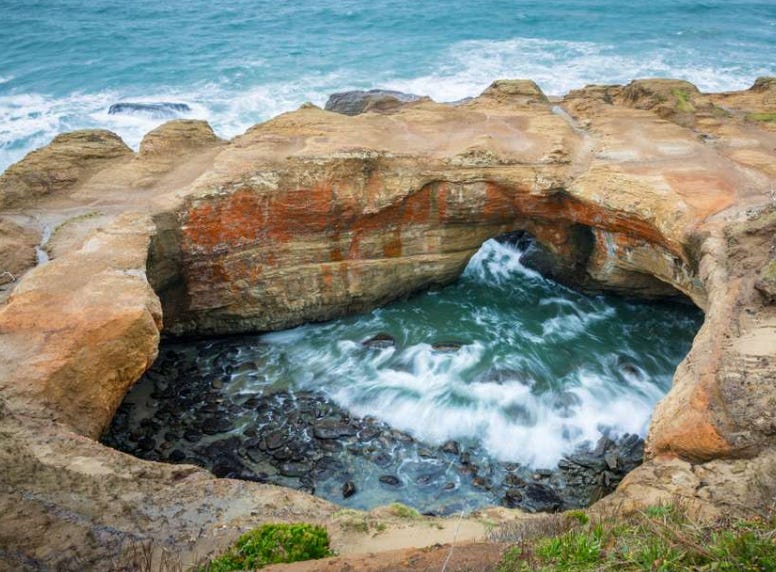
ONE OF MY FAVORITE PLACES on Earth is the Oregon Coast. There you’ll find great swirling caverns of crystal blue water that crash with terrifying force against these incredible cliffs. It echoes up and down the coast, smashing and shifting the literal edge of the continent. As you lie in bed, you can almost hear it still echoing inside your skull. When I think about our content-era of the 2020’s, that’s what I think of: a great, swirling, unintelligible whirlpool bashing into the edges of its container, chaos trying to break free.
This is why writing has felt absolutely impossible to me lately. Because who wants more words in a world where we are bombarded with everything and too much? Who wants this little column, a poem, when there are already ones, better ones, that you could read instead?
In such a swirling, who wants more water?
And so, true to my personality, I wonder, what if I moved away? Fled to some remote and beautiful corner of this dying world? Hid from technology and simply wrote in my journal every morning and typed up the day’s work on a typewriter or a Mac from Y2K? Would I still feel this way?
This, then, begs the question that’s at the heart of what I’ve been circling: why do we even bother with making art? What’s the point?
Is the point to be read? To be heard? To be listened to? Or is the sole point the writing or the acting or the action of creation rather than the final product? (Insert your preferred art form here; the reality is the same.) Even so, we keep making, writing, speaking, sharing. Why?
I know some of you pragmatic types out there are probably strategizing, ready to offer your own opinion or a step-by-step plan for how to reach my target audience through the haze of pop culture. I’ve tried that, and it sucked every last crumb of joy out of me. Because if' I’m writing for the readership, or to glean followers, those objectives don’t actually make for good art.
In the theater, the first thing a beginning actor must do is identify their character’s objective and uncover what tactics they’ll use to get it. My professor, Mark Lewis, once said something that changed everything for me as an actor, that I repeatedly instruct my students as well: “Your objective cannot be to look cute, or to be impressive. That makes for really bad acting.”
I’d spent my whole life up to that point (and, when my guard is down, hence this essay, still spend it) trying to be cute or cool or relevant or impressive or noteworthy or interesting or good. (See last Substack here.)
But those are bad objectives for living a life, as an artist or no, because they depend on other people’s perceptions, which of course we cannot control. While I can’t guarantee authors and poets like Louise Glück or Mary Oliver or Jane Austen didn’t struggle with this sometimes, based on their body of work I can guarantee that they weren’t writing to appear a certain way. Austen’s books were even published anonymously (largely in part to her being a woman in a male-dominated world, but still.) The point was the story, not the recognition or the fame. The point was and still is the truth, the perspective, the light.
Would their work still matter even if no one ever read it? Of course!! we want to cry out. But really think about it. If our answer is yes, why?
FAME IS FICKLE AND SHORT LIVED; if audiences determine “success,” something might be successful one day, and not the next. The masses change their collective mind more often than the girls change their clothes in that Katy Perry song. As the prophet Isaiah writes, “the grass withers and the flowers fade beneath the breath of the Lord. And so it is with people.”
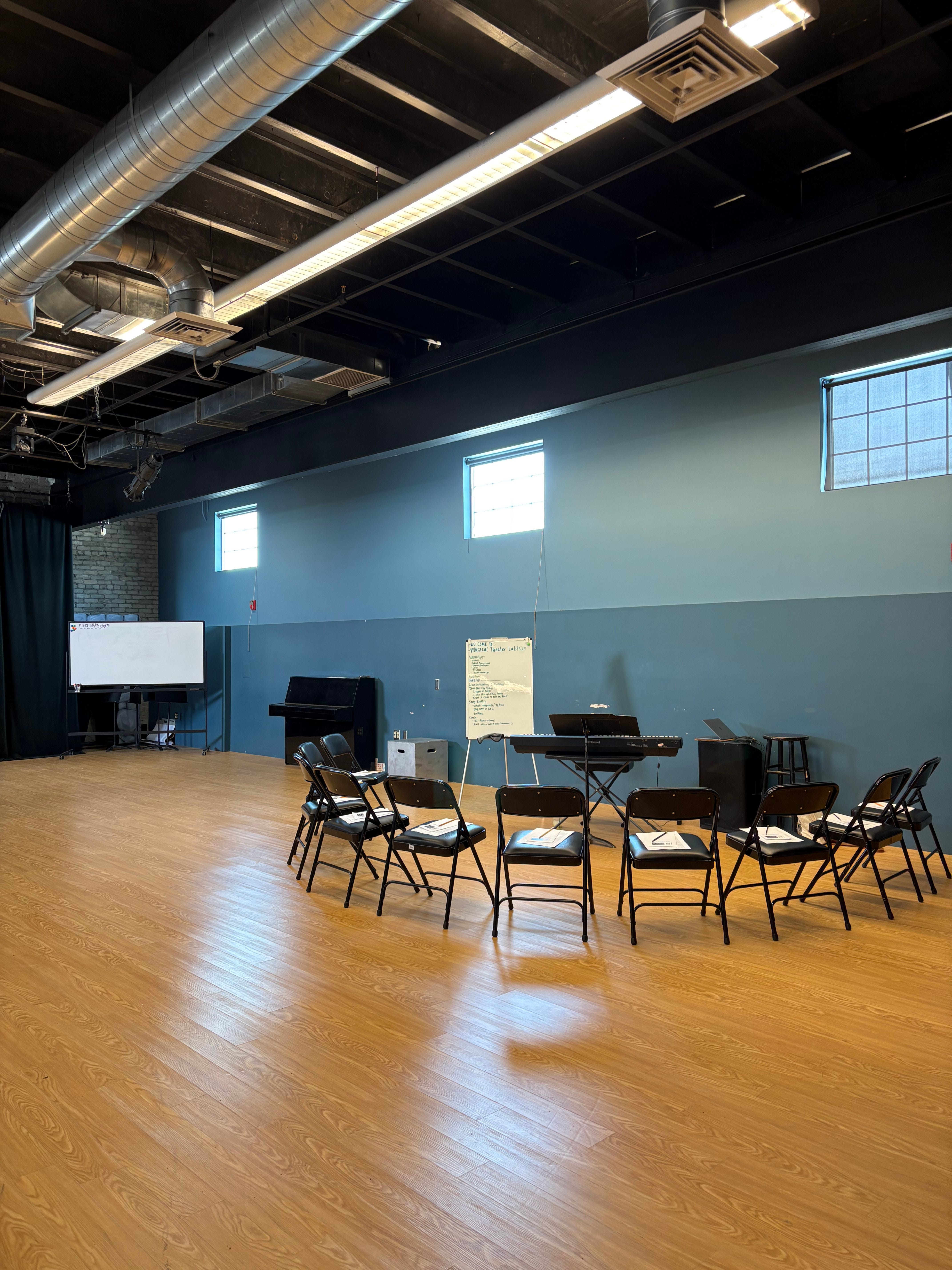
I spend about half my life in the theater, making plays that are quite literally here today and gone tomorrow. Productions can’t be put into a museum. My art is ephemeral, and I wonder if writing, though it lives semi-permanently in one place or another, is somewhat ephemeral too. Written down and then waiting to be discovered like buried treasure, like a spirit waiting to be noticed, like a dusty book on the shelf curiously cracked open.
We are trained in this noisy world for instant gratification. For immediate likes and views and shares and comments and scandal and TWEETS IN ALL CAPS !!! and retaliation and inane humor to stomach the poison in the feed that we willingly swallow again and again. I fear (I rejoice) that art-making doesn’t work like that. It is an entity all to itself. It is slow, it is often hidden, it takes time to make, time to engage with, time to mature.
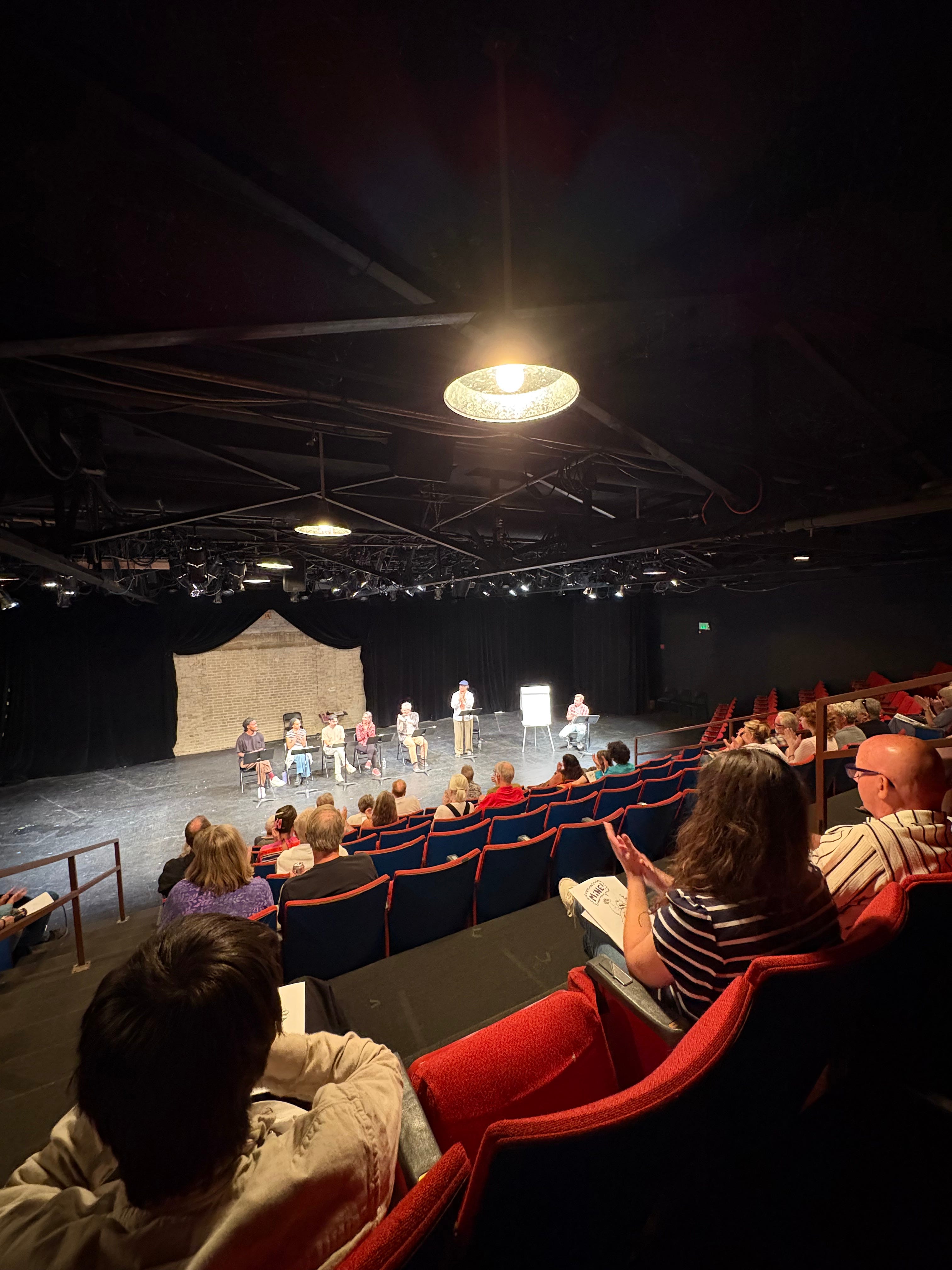
I’ve seen and heard and read a lot of great art this summer, from friends (playwrights, actors, writers) and authors I’ve been meaning to read and some I’ve never read before. And it’s made me ask: what if good, real art—art-making in this current age—is not another drop of water in the ocean but is a precious stone that filters its way down through the whirling sea and lodges itself in the cracks of the rock, there and shimmering. There for those who choose to distinguish between fool’s gold and real gold. For those who, on a Monday night, resist the temptation to lay in bed and watch Netflix and get their butt up to listen to selected readings by a very talented friend, finding themselves greatly encouraged and lightened afterward (True story.)
And maybe it won’t be instant. Maybe the art will take a long time to find its place, to find the souls who will hold it as its meant to be held. It matters, simply because it was made.
Keeping the truth (art) locked up inside does nothing but take up space and drive us wild. It’s Something—it’s alive and begging to be released.
There are better objectives for making art in a world gone mad, and I’m wondering if we (me) need to stop wishing for pastime idyllic imagined conditions—a New York City apartment, a window seat, a meadow, a writing desk free of distraction. Rather perhaps we need to pivot to objectives that fit—to use another theater term—the given circumstances: where we find ourselves now, what is happening just before the scene begins. There is nothing to do but embrace what we’re given, and make choices based on that.
Yes, it’s loud and it may take awhile for the words to land.
Yes, it’s oversaturated but maybe these words, these stories, are for just one or two specific people, and that makes it worth it. If we’re making art for the fame, I fear we will never be satiated because we’ll always be chasing some next star. Besides, you never know what will happen.
Yes, it’s scary and terrible and robots seem way too smart, but now more than ever it is important to glitter on the walls of the cavern as truth in a milieu of fool’s gold. The people who need it will find it. It may be naïve, but I believe that at my core. I have to believe it.
At breaking points such as these, artists (prophets) have a unique role to play:
to tell the truth about the world
to bring light
to bring hope
to make sense of
to bring humor
to offer a new perspective
to express something otherwise inexpressible
to offer empathy
to tell a story (and usually more than one) (which is, the truth dressed in a different outfit)
to help others (and yourself) find the way
to illuminate
to bring breath to something dying
to rescusitate
to dare
to love (the world, other people, the grass, the sky, yourself)
to believe again
And that, my friends, that is the point.
Eyes up. Look for the glimmer.
-Alyssa
If you’re an artist, why do you do it? What keeps you going when things get loud? I’d love to know. Let’s encourage each other!
p.s. On the other side of this coin is this article from Inkwell this week. I wrote today’s article as a writer working through what keeps me from making art, something I believe is a calling for me, and hopefully to encourage you to keep pressing into your calling even when it feels unreasonable. However, as is written in the Inkwell article by Sherry Ning, not everything necessarily needs to be made public. “A space cannot be sacred if it is designed for exhibition.” Whaddya think? Let me know in the comments.
Thank you Alyssa for being so brave and for not giving up on what you believe and on the beautiful gift that you share here with those who read it. It is beautiful and it inspires me to look and listen and be present to each day. Your words are a glimmer, be encouraged!
Thank you for writing. This was so good!